Beginners Lesson 13

July 2, 2008

The Egg Fly


Strictly speaking this is not a fly, something it has in common with many of the creations invented in recent years.
However it does have its place in the fly box.
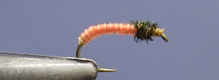
The origins of this fly can be attributed to our American cousins. It was designed to imitate the salmon eggs which get dislodged from the redds when the salmon are spawning, and which are greedily devoured by waiting trout.
This is all a long way from our stocked stillwaters in the UK where it can be effective  on its day for browns and rainbows. I have used them occasionally with some success on rivers.
 
The Materials required could not be simpler.
 
  • Hook - fine wire, wide gape, fly hook sizes 10/12 (kamasan 160)
  • Tying thread - red, fluorescent red or orange.
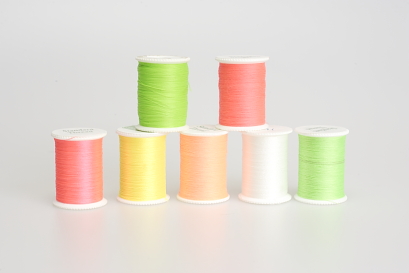
  • Egg fly yarn, fluorescent orange,pink,red, or yellow.
I have found the most popular to be a mix of orange and pink.  
 
Once you have followed the simple steps to create a ‘fluffy ball’ you can trim to the size and shape to suit yourself.
Best fished with an intermediate flyline.
David Cammiss


Intermediate Lesson 4

May 27, 2008

The Daddy Longlegs ( Crane fly )

 The crane fly is a land based insect which features in the fly fisher’s armoury because it is an ungainly flier and regularly finds it’s way on to lakes and rivers by accident. They usually appear about August time and can be quite an abundant food source for the trout either on the surface or as they get caught up in the surface film and drown.

Their long legs make them very distinctive and all the imitative patterns are based on this feature. They can be tied with a detached body on short shank hooks or wool body tied on a long shank hook, there are even gold bead versions.

The most common and certainly an effective pattern is tied with hackle point wings and knotted cock pheasant tail fibres for the legs on a long shank size 10 hook. The most trying part of this fly is tying the knots in the pheasant tail fibres. Try to acquire the centre tail feathers from a mature cock bird. These fibres will be longer and stronger. I also tie two together at the same time, it saves time and the trout do not seem to notice.

A variant of the daddy long legs is the hopper. For this pattern just do not give it wings and tie a seals fur dubbed body with lurex ribbing.


  • Hook - Long shank size 10
  • Tying thread - Brown
  • Body - Brown wool or floss
  • Rib ( optional ) - Fine copper wire
  • Wing - 2 brown grizzle hackles over back
  • Legs - 2 pairs of knotted cock pheasant tail fibres each side of the body
  • Hackle - Brown cock hackle

For the Hopper

  • Body - Seals fur ( any colour )
  • Rib - Lurex silver or gold
  • Hackle - Colour to match

Happy Fishing from Dave C and the Team


Beginners Lesson 12

April 8, 2008

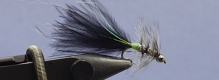
The Woolley Bugger


This is a lure which is equally effective in rivers and stillwaters, particularly for rainbows.

The most popular colours are olive, black, orange and red. Can be tied on longshank 8s, 10s, and 12s. For rivers I prefer a size 8 wet fly hook.

Early season on stillwaters a size 8 L/S olive fished on an intermediate line is a good starter. On my recent trip to N.Z. I had about a dozen rainbows to 3lb. in a fast river all on olive and orange woolley buggers on size 12 L/S in a morning session.

There is little new on the tying of this fly which we have not covered on previous lessons.


Materials


  1. Hook -  L/S size 8, 10 or 12 - wet fly 8
  2. Thread - To match body colour
  3. Rib - Gold or Silver oval - Gold or Silver wire optional
  4. Body - Black , Olive, Orange and Red Chanille
  5. Tail - Marabou to match body
  6. Tail Flash - Colour to match
  7. Hackle - Henny cock, colour to match body ( long enough for 2 turns at head and 3 turns down the body )
  8. Gold Bead - optional
  9. Clear Varnish ( cement ) - for the head


Happy Fishing

Dave C and the Team


Beginners Lesson 11

March 10, 2008

The Cormorant

 cormorant.jpg  

This fly has its origins in fly fishing competitions. It is neither a nymph nor a lure but can be fished as either. Primarily a still water fly it can also be used on rivers and tied with  a silver or holographic body. It bears more than a passing resemblance to a butcher , only with more mobility. 

The early patterns were tied with a body of peacock herl with a wire rib. More recently you will see them tied with fine fritz or metallic bodies, usually silver. This is because of the fragility of peacock herl.

 The materials are very basic

  • Hook - Heavy weight wet fly size 10 / 8
  • Tying thread - Black
  • Tail - Tag of Flour. Red wool / Floss
  • Body - Silver / Red wire
  • Wing - Black marabou
  • Wing flash ( optional ) - Red lurex

A good fly to have in your box, particularly if you do boat fishing. Regards Dave Cammiss and the Team. 


Beginners Lesson 10

February 10, 2008

The Stickfly

stickfly.jpg

This fly has been popular with reservoir and stillwater trout fisherman since the seventies. It is an imitation of the caddis grub in its shell. The caddis grub eventually matures to be a sedge which is also popular with the trout. This fly can be tied on all sizes down from long shank 10s. Smaller sizes can be good on rivers.

Back in the mists of time when I was a young lad we used to turn over the bigger stones on the local stream and collect the caddis grubs in their shells and use them for bait, but that is another story.

This is a relatively easy fly to tie. You will have used all the steps at some time on the previous lessons. The peacock herl is fragile and does need the ribbing. You can give the body 2 coats of varnish and it will make it more durable. The hackle can be any shade of brown or orange. I have used brown partridge hackle to good effect, particularly on the rivers.

Materials

  1. Hook - Long shank 10/12/14.
  2. Thread - Black or Brown. If you tie some flies unweighted use a different colour thread to the weighted.
  3. Rib - Wire copper,red.green or black.
  4. Tag - Fluorescent antron or wool. yellow, green / lime.
  5. Body - 3-5 strands of peacock herl depending on the size of hook.
  6. Hackle - Henny cock. brown, ginger, orange or brown partridge.
  7. Underbody fine lead wire. If not available copper wire.

Regards Dave C and The Team  


Intermediate Lesson 3

December 31, 2007

The Klinkhamer

klinkhammer.jpg  

The Klinkhamer was originally designed by Hans Van Klinken to copy the fly emerging from its shuck as it made the change to a flying insect. There are ‘puritans’ among us who refuse to accept this fly as a true dry fly because the fly has not been airborne. To those of us who just enjoy fly fishing it is a dry fly which often doubles up as a support or sight fly with a nymph attached New Zealand style underneath.It is not the easiest of flies to tie but is well worth persevering with.There are several ways of tying this fly, all based on using a yarn post to achieve a horizontal hackle which looks like a parachute. The hook used is a lightweight buzzer hook. I use Kamasan KB100s sizes 10 and 12.I hope you will find the lesson easy to follow. You can use exactly the same technique to tie parachute dry flies, on which you use a straight hook with tail fibres to keep the tail end up in the water. Hopefully this satisfies the purists.I use Kamasan KB400s.  For both of these patterns you will find that the better the quality of the hackle the better it floats. If you prefer to dub the body keep it as sparse as possible, it stops the fly getting waterlogged.Give it a try and let me know how you get on.

Materials

  • Hook Kamasan B100 ( or similar ) sizes 10, 12 or 14 if you are brave.
  • Thread Sparton Micro black (or similar).
  • Rib optional fine silver wire.
  • Dubbing Hare or Possum body fur.
  • Hackle best quality cock hackles you can afford.
  • Wing Post Egg yarn or white calf tail.
  • Dave C. and The Team


    Intermediate Lesson 2

    November 20, 2007

    The Booby

    booby2.jpg

    The Booby is a relatively recent addition to the flyfishers arsenal. The original patterns were tied using polystyrene balls tied together in the mesh from ladies tights and tied in at the eye of the hook. The way they wobbled about was how the fly acquired its name. Their other main disadvantage was that if you applied varnish to the head and some got on the polystyrene it was only a question of time before either one or both ‘deflated’.

    The fly had proved so successful on the stillwaters, particularly for rainbows, that some enterprising angler came up with booby tube which could be supplied in various lengths and was not damaged by varnish.
    That is the material we have used on the demo.
    The variations on colour of head, chenille, cactus chenille or the marabou tail is limited only by the imagination of the tyer. Green and white and orange and white are favourites.

    The ‘fly’ is usually fished with a sinking line. Once the line has settled on the lake bed the booby will be floating above it at the height of the leader. You can be lazy and sit there and wait for a rainbow to cruise by and take the fly, or you can retrieve your line in long pulls, allowing time between for the fly to lift back up to its original height. As you pull the line the booby is drawn to the lake bed.

    In recent years the competition fishers use boobies to fish the ‘washing line’ method. Usually, I believe, with an intermediate line. The booby is fished on the point and 2 droppers with nymphs or buzzers on the cast. This method is used to explore different depths where the fish are feeding.
    I do not believe our American friends have discovered this ‘fly’ yet despite their Dolly Parton probably being responsible for its name.
    If you like sitting on the bank and taking it easy this fly might be worth a try. It has accounted for some big fish.

    Materials

    • Hook long shank 10 / 8
    • Body orange chenille fritz
    • Tail orange marabou
    • Head plastazote tube orange or white
    • Tying silk orange
    • Tail flash optional

    Please note color variations are optional ( white /green - black / green ) 

    Regards
    Dave Cammiss and The Team


    Intermediate Lesson 1

    November 2, 2007

    Texas Rose Muddler

    fly51.jpg

    The original Muddler Minnow was introduced in to this country from America in the late 1960s.It was tied to be an imitation of the sculpin minnow. The original pattern enjoyed  great success on the Midland reservoirs when it was first introduced. British reservoir anglers, as always, have this shameless habit of ‘improving’ everything that they try. It was not long before the Black muddler, black body and silver rib, was the in fly quickly followed by the Texas Rose and the Orange muddler, orange body and gold rib. The one thing they all had in common was the deer hair head. This was achieved by using spun deer hair and clipped to form a bulky bouyant head. Hook sizes from long shank 6 to 10. It can be quite an exciting fly to fish when you strip it through a big ripple when the trout are high in the water. You wont get as many as you miss but it can liven up a days fishing. Once you have mastered the tying in of the deer hair and trimming it to shape there is no end to the patterns you can tie.This lesson has already inspired a line of thought with muddlers which I have not yet seen tied and I think they are looking promising. 

    Materials

    • Hook long shank 10 / 8
    • Body orange wool or chenille
    • Rib silver lurex
    • Wing dyed yellow hair - goat or calf tail
    • Head spun deer hair
    • Tying silk orange


    Happy Fishing

    Dave Cammiss and The Team


    Beginners Lesson 9

    October 2, 2007

    The Minkie

    minkie.jpg

    This fly has been around on UK stillwaters for about ten years now. It was not mentioned in the 1992 edition of Fly Patterns by Taff Price. I first heard about it when I was working as a warden at a local trout lake. Until that time I had been tying zonkers. The principle for tying is the same except that the thin strips of mink were used instead of rabbit. The mink is a finer fur and can be tied in smaller sizes than rabbit. The early patterns were often tied with a rib running through the fur on the same basis as the New Zealand Matuka series. Now everybody seems to be happy with the mink strip tied in at the head and tail only. I was reluctant to change, but was eventually able to convince myself that provided you wet the underside of the strip well, with saliva ( spit ), and stretched it tightly to the head and secured it with enough tight turns, it would be OK.

    The benefits of mink are the colours available, white, silver and black/brown. The fur is very mobile and seems to shimmy with even the slowest retrieve. The colours of the the body in fritz or chenille are limited only by your imagination.

    If you do decide to cut your own strips ( provided your grannie has let you have her mink coat ) there is a right and a wrong way to cut the pelt. You will need either a very sharp stanley knife or a scalpel with a fresh blade.
    Place your pelt fur side down and mark the skin size in biro ( pen ) in strips about 4mm wide, head to tail. If you can get your Grannie to help get her to hold one end while you run the blade of the scalpel, preferably with one sweep, down the length of the pelt. Do not lie it on the bench you will damage the fur! Once you have got the first strip done the rest are much easier.
    As a lure I would give it top marks. I rarely use lures but at the weekend I did try one I had tied for the video and was rewarded with a 4lb. rainbow.

    Materials

    • Hook long shank 6 / 8 /10
    • Body fritz chenille any color
    • Tail / Wing mink strip - white / silver / dark brown
    • Head chain bead - silver / gold
    • Tying silk black

    Happy Fishing
    Dave Cammiss and The Team


    Beginners Lesson 8

    September 16, 2007

    The Soldier Palmer

    fly3.jpg

    The Zulu

    fly4.jpg

    The Soldier Palmer is an old pattern which still finds favour as a bob fly by boat anglers. There are three flies of a similar vein which are tied in basically the same way, the others are Grenadier and Zulu. If you can tie one you can tie them all. There is a more recent variant which is popular and that is the Bibio. All are worth a place in your box.

    Today we will start with the Soldier Palmer which has a palmered hackle. This means that the hackle is tied in at the head and wound down the body as far as the tail. It is secured by the gold wire rib. This makes the fly durable.

    Soldier Palmer Materials

    • Hook sizes 10….12 wet fly or long shank
    • Red tying thread
    • Medium gold wire
    • A long brown cock hackle
    • Red wool or antron for body and tail

    Tools are simple. Vice, bobbin holder, scissors. Hackle pliers and grannies hat pin.

    The Zulu Materials

    • Hook sizes 10….12
    • Black tying thread
    • Medium silver wire
    • A long black cock hackle
    • Black antron for the body
    • Red wool for the tail

    Tools as above.

    I am confident that you will find this lesson an easy one.
    Let me know how you get on.

    P.S. Thanks again for all your comments and I’m very pleased to hear you are all making good progress.

    Happy Fishing
    Dave Cammiss and the Team